The Nicene Creed
What You Need to Know about the Most Important Creed Ever Written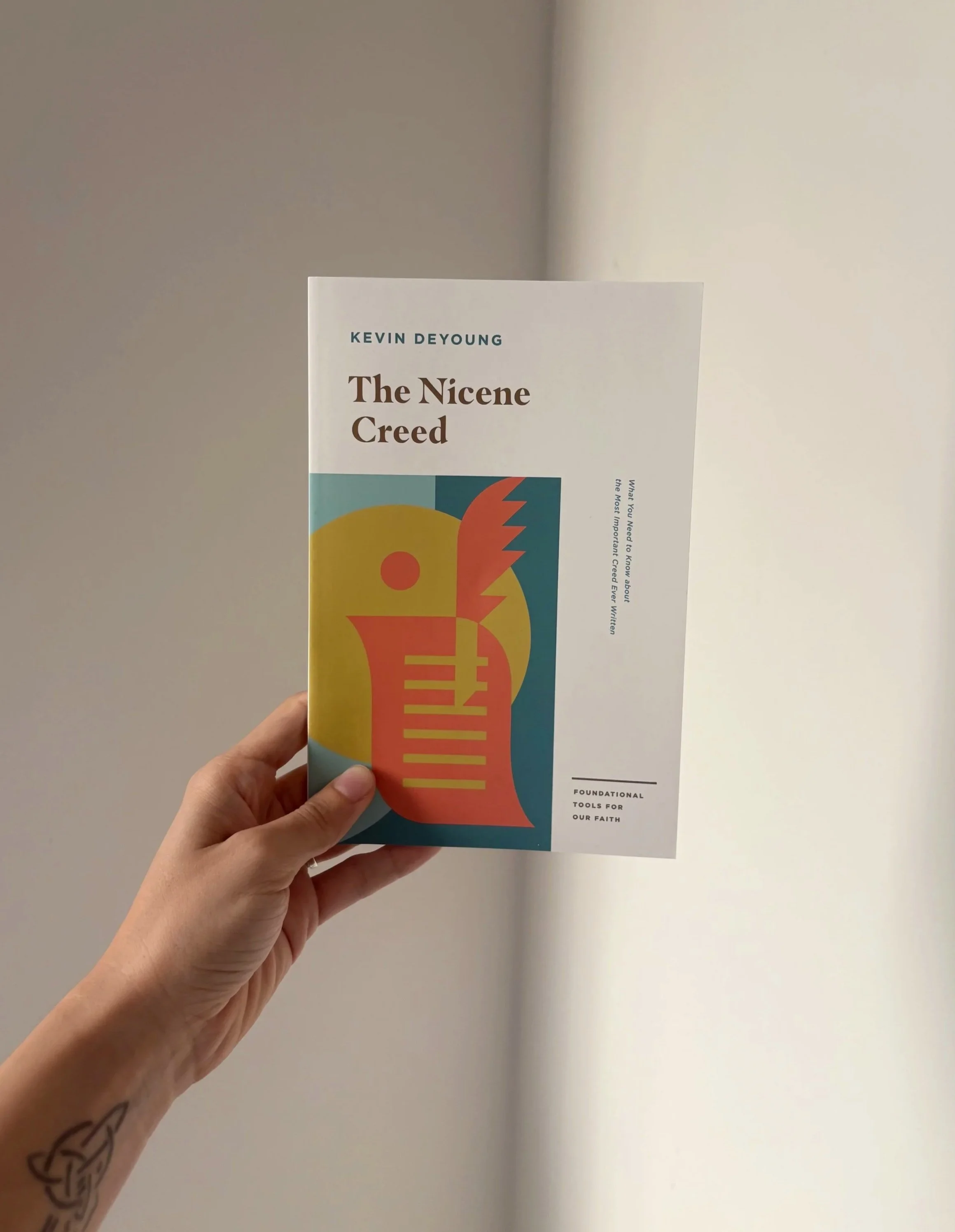
We believe in one God, the Father Almighty, Maker of heaven and earth, of all things visible and invisible.
And in one Lord Jesus Christ, the only begotten Son of God, begotten of his Father before all worlds, God of God, Light of Light, very God of very God,
begotten, not made, being of one substance with the Father; by whom all things were made; who for us and for our salvation came down from heaven,
and was incarnate by the Holy Spirit of the virgin Mary, and was made man; and was crucified also for us under Pontius Pilate; he suffered and was buried;
and the third day he rose again according to the Scriptures, and ascended into heaven, and is seated at the right hand of
the Father; and he shall come again, with glory, to judge both the living
and the dead; whose kingdom shall have no end.
And we believe in the Holy Spirit, the Lord and giver of life, who proceeds from the Father and the Son; who with the Father and the Son together is worshiped and
glorified; who spoke by the prophets; and we believe in one holy catholic and apostolic church; we acknowledge one baptism for the remission of sins; and we look for the resurrection of the dead, and the life of the world to come.
Amen.
Note: This creed is not authoritative in itself – it’s not the inspired Word of God. But what I love about the Nicene Creed is how it reflects the authority of Scripture. Every line points back to God’s Word, which never contradicts itself. The Bible upholds and affirms itself, and this creed simply echoes the truth breathed out by God.
Why You Should Read The Nicene Creed by Kevin DeYoung
A creed is a short statement that expresses what Christians believe. The word “creed” comes from the Latin credo, meaning “I believe.” When we recite a creed in church, we are not just repeating old words – we are joining our voices with believers across time and around the world. Creeds remind us who God is, what He has done, and what we hold to be true.
Reciting the creed together helps unite the body of Christ. It gives us shared language to confess our faith, to remember sound doctrine, and to write truth on our hearts. In a world full of confusion and change, creeds help anchor us in what is eternal and unshakable.
That’s what makes this such a rich and needed book. In clear, accessible language, DeYoung helps readers rediscover the depth and beauty of this ancient confession of faith, and why it still matters today.
“Now is an opportune time to learn (or relearn) where the Nicene Creed came from, what it means, and why it still matters.”
DeYoung approaches the Nicene Creed from three key angles:
Historical (where the creed came from)
Theological (what it means)
Devotional (why it still matters)
Here are a few reasons to read it:
1. It explains where the Creed came from.
DeYoung begins with the story of where the Creed actually comes from. “The second ecumenical council, which met at Constantinople in AD 381. This Niceno-Constantinopolitan Creed (as it is sometimes called) expands on the earlier Creed of Nicaca (325) by including a much longer statement on the Holy Spirit, as well as new wording about the Virgin Mary, the crucifixion, baptism, the church, the resurrection of the dead, and the life everlasting.” (pg. 13) This is where church leaders gathered to defend the truth about Jesus Christ. This historical foundation helps us see why the Nicene Creed was written and how it became a cornerstone of Christian belief.
2. It helps us understand what the Creed means.
Each chapter focuses on 12 phrases and words – like “We believe,” “Only begotten,” and “For us and for our salvation.” DeYoung unpacks these truths carefully and clearly, helping readers understand deep theology, even language, without feeling overwhelmed.
“Think of how important it is in the New Testament that God's people believe the right things. Jesus asked his disciples, "Who do people say that the Son of Man is?" implying that knowing his true identity was of paramount importance (Matt. 16:13). The post-Penrecost disciples devoted themselves to the apostles teaching, the first mark of the primitive church (Acts 2:42). Paul often talked about the necessity of believing and confessing (Rom. 10:9-10) and of passing on the gospel tradition he had received (1 Cor. 15:3-11). The Epistles are full of early creedal statements such as "There is one God, and there is one mediator berween God and men, the man Christ Jesus" (1 Tim. 2:5) and "Christ also suffered once for sins, the righteous for the unrighteous, that he might bring us to God" (1 Pet. 3:18). God's people are sometimes charged according to sacred truths about Christ (1 Tim. 6:13-16; 2 Tim. 4:1-2). In many places we see that the essence of the earliest Christian confession is that Jesus Christ is Lord (1 Cor. 12:3; Phil. 2:11).” (pg.28)
3. It reminds us why the Creed still matters.
This book isn’t just about church history – it’s about faith today. DeYoung connects the Nicene Creed to our modern world, showing how its truths still protect, guide, and shape the church.
“The Nicene Creed deliberately ends on a note of expectation and hope.” (pg. 85)
4. It unites us with Christians everywhere.
When we say the Nicene Creed, we’re joining with the global and historic church – past, present, and future. It’s a beautiful reminder that the same God who was faithful in the fourth century is faithful today.
DeYoung closes the book (pg. 82-85) with six lessons we can learn from this 1,700-year-old confession of faith:
The importance of believing in the right thing.
The way history shows that new or clarified statements are necessary to combat error.
The central importance of the Trinity.
The value of sound doctrine for Christian life and worship.
The focus on salvation, that Christ came “for us and for our salvation.”
And finally, that this ancient creed points us to the future, reminding us that we await the return of Christ and the life to come.
If you’ve ever wanted to understand what the Nicene Creed means and why it matters, this book is a wonderful place to start. It’s short, clear, and full of truth – a timeless reminder of what Christians have always believed and must believe.
You can purchase The Nicene Creed: What You Need to Know about the Most Important Creed Ever Written by Kevin DeYoung by clicking the underlined title!
“And remember, it is not just life that we are longing for—life without pain, life without sin, life with fellow Christians and with fellow family members who died in Christ. We look forward to all that, as well we should. But more importantly, the life we look forward to is life with the triune God-the God that the Nicene Creed does so much to explain and honor. For ages upon ages we will thrill to know and to worship God the Father Almighty, to bow before his only begotten Son, the Lord Jesus Christ, and to sing praise to the Holy Spirit, the Lord and giver of life. All this is good news with this glorious God for world without end. Amen.”